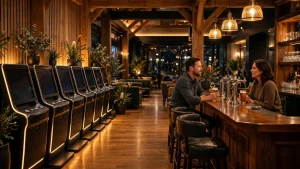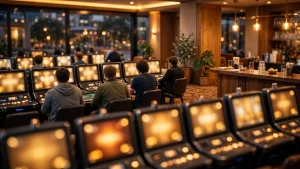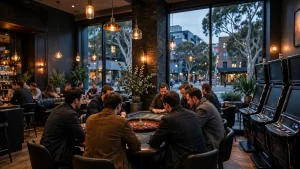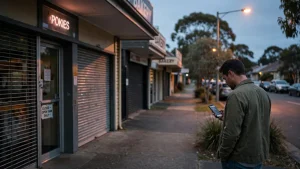
RTP is a long-run measure, while venue hours, location and machine information require separate checks.
A pokie’s return-to-player percentage, or RTP, is a theoretical measure of how much of the money wagered on a game is expected to be returned as prizes over a very large number of plays. It describes a statistical tendency across repeated play, not a promise about what you will receive in a particular session. It also does not tell you when a prize will occur, how large an individual prize might be, or whether your next spin will win.
The distinction matters when you compare claims about the best-paying pokies in South Australia. A published RTP can help describe a game’s theoretical return under a stated configuration, but it is not a forecast for an individual player. A session is a small and unpredictable sample of the game’s possible outcomes. Its result may differ sharply from the theoretical return, and the RTP cannot show you in advance whether a session will finish ahead or behind.
There is another complication: the same pokie may not always use the same RTP setting. A specialist review reports that some providers give casinos a choice of return settings for a game. Where that choice is available, the version installed at one casino may have a different theoretical return from the same named game elsewhere. The title alone, therefore, may not identify the setting being played.
If you’re looking for pokies options in South Australia in 2026, this list gives you a starting point for checking what each operator’s available details say. Review the current terms and whether a site suits you before signing up.
7Bit Casino
7Bit Casino is listed with a Curaçao licence and is operated by Dama N.V. The supplied details are limited to its licensing and operator.
SpinsUp
SpinsUp is listed under Curaçao Gaming Control Board licence OGL/2023/174/0082, with Dama N.V. as the operator. The available information focuses on its licence and operator.
Playfina Casino
Playfina Casino is listed with a Curaçao eGaming licence and has been operated by Hollycorn N.V. since 2017. Its minimum deposit is A$20–30, depending on the offer.
Ricky Casino
Ricky Casino lists crypto payouts under one hour and PayID payouts in 1–3 business days. The minimum deposit is A$20, or A$30 to qualify for the bonus.
Golden Pokies
Golden Pokies is listed with a Curaçao licence. No further operator details were provided.
Vegaz Casino
Vegaz Casino is listed under Curaçao licence OGL/2024/1335/0780. Its minimum deposit is EUR 20.
Neospin
Neospin is listed under Curaçao Gaming Control Board licence OGL/2023/176/0095, with Hollycorn N.V. as the operator. The supplied details concern its licence and operator.
JustCasino
JustCasino is listed with a Curaçao Gaming Control Board licence. No further details were provided to support a more specific verdict.
Bizzo Casino
Bizzo Casino is listed with a Curaçao Gaming Control Board licence and is operated by TechSolutions Group N.V. The available information is limited to its licence and operator.
SkyCrown
SkyCrown is listed with a Tobique Gaming Commission licence and a minimum deposit of A$30. Its stated payout times are around 10–15 minutes for crypto and 1–5 days for fiat.
This is why a claim about a game’s return needs context. Check whether the stated figure applies to the precise version and setting available at the place where you intend to play. A game description or review may refer to a particular configuration, while a machine at a South Australian venue may use another. If the setting is not identified, the claim does not establish the return of the version in front of you. Do not assume that a figure attached to a game name applies universally.
RTP also needs to be read as a long-run measure rather than a session-level result. The game’s Random Number Generator determines each spin as an independent random event. The outcome of one spin does not make a win more or less due on the next spin. A run of losses does not create a debt the game must repay, and a recent win does not mean the following spin is less likely to win. Past outcomes are not a reliable way to predict the next one.
Independence does not mean that every spin has an identical prize outcome; it means that the previous result does not determine the next result. The paytable and game rules describe which outcomes can produce prizes and how those outcomes are treated. RTP summarizes the theoretical return associated with the game configuration over extensive play. It does not reveal the next result or convert a sequence of past results into a useful prediction.
The term “best” can therefore conceal different questions. You might mean the game with a higher stated theoretical return, the game with a particular style of play, or a game that has recently paid a prize. RTP can address only the first kind of comparison, and only when the figures refer to comparable settings. A recent payout does not prove that a game has a better return, while a higher theoretical return does not guarantee a better personal result.
For a practical comparison, separate what is known from what is not. Identify the exact game and its stated RTP setting, then check that the description applies to the version available to you. Treat an unspecified figure as incomplete rather than filling in the missing detail from the game’s name. Even when two figures can be compared, they describe theoretical returns, not a ranking of likely short-term experiences.
This approach applies whether you are considering pokies at a South Australian venue or reading about games more generally. A claim about “South Australia’s best pokies” cannot be established by a title, a recent win, or an RTP figure detached from its setting. The useful question is narrower: what configuration does the figure describe, and does it match the game you are considering? Once you have that answer, remember that each spin remains an independent random event. RTP can help you interpret a stated long-run property; it cannot tell you what the next spin will do.
Attention: A published RTP is a theoretical long-run measure and not a guarantee of what you will receive in a particular session.
A venue listing can tell you where a place is and how to contact it, but it cannot reliably confirm that it is open at the moment you plan to visit. Opening information can change, and a page that remains online may not have been updated after a change. Check the venue’s own current information, then contact it directly if the timing matters.
Start with the venue’s official website or its verified social media account. Look for a dated notice, rather than relying only on a general listing that gives regular hours. A notice about a temporary closure, altered service or private event may be more current than the venue’s standard information. If the page has no date or does not address the day you intend to go, treat it as a starting point, not confirmation.
A direct phone call is the clearest way to resolve uncertainty. Ask whether the venue is open at the time you expect to arrive and whether patrons can access the area you intend to use. A venue may be open for one purpose while a particular service or section is unavailable. Make the question specific: “Is the venue open now?” and “Are the pokies operating and accessible to patrons now?” are separate checks.
That distinction matters because a machine’s presence does not establish that it is available whenever the venue is open. Machines may be switched off, temporarily unavailable, or in an area that is not accessible at that time. Likewise, seeing a venue described as a club, hotel or entertainment venue does not confirm that its pokies are operating when you arrive. Confirm the status of the machines as well as the status of the premises.
For a same-day visit, check again close to departure if the information is important to your plans. A result shown by a map service or directory may be useful, but it can be stale or reflect a general schedule rather than a temporary change. Compare it with the venue’s own announcement or call the venue. If the sources disagree, give more weight to a direct, recent confirmation than to an undated listing.
When calling, keep the questions practical. Confirm whether the venue is admitting patrons, whether the relevant area is accessible, and whether the machines are operating. If you need to know about a particular day, state that day rather than assuming the answer applies every day. If staff cannot confirm machine availability, you still have a useful answer: the venue’s opening status and machine status are not both established.
There is also a difference between an opening schedule and an operational check. A schedule describes the hours a venue says it intends to open; it does not prove that the doors are open at a particular moment. A live confirmation answers the immediate question, but it does not guarantee that conditions will remain unchanged by the time you arrive. Use the schedule to plan, and a recent venue confirmation to reduce uncertainty.
Responsible-gambling staffing information is not a substitute for checking opening status. A report published by regionriverina.com.au describes a requirement for venues with more than 20 gaming machines to have a dedicated responsible gambling officer on duty while the machines are operating. The report also describes a one-month grace period for venues to remove signage and introduce those officers. These details concern staffing and implementation; they do not tell you whether a particular South Australian venue is open or whether its machines are available at a given time. For an individual visit, confirm directly with that venue.
If you are checking early or late, avoid inferring availability from the fact that the venue has operated at other times. A listing that appears to cover a full day may be generic, and a past visit is not evidence of today’s status. Confirm the relevant time with the venue rather than assuming that an opening pattern continues unchanged.
A short verification routine is enough: consult a recent official update, call if the timing or machine access is unclear, and ask separately about the venue and the pokies. This prevents a common planning mistake—treating a venue’s general presence, listing or stated schedule as proof that the machines will be available when you arrive.
If you are trying to find pokies near an airport or central business district in South Australia, treat proximity as a route-planning question, not as proof that a particular venue has machines. A map pin can help you assess where a venue is, but it does not establish what is available inside, whether you can enter, or whether the location suits your trip.
Start with the venue’s exact address, rather than relying on a broad label such as “near the airport” or “central”. Those descriptions can cover very different routes. Check the address against the destination you actually need to reach: an airport terminal, a hotel, a meeting point or a particular part of the CBD. Then consider the whole journey, including the walk between a transport stop and the venue. A short distance on a map may still involve a difficult crossing, an indirect route or a stretch that is inconvenient with luggage.
For an airport trip, distinguish between being near an airport and being practical for someone travelling through it. Check which terminal or airport entrance your route uses, where you would start and finish, and whether the trip requires a change of transport. If you are collecting or dropping off someone, allow for the fact that the airport precinct may have separate access roads and stopping areas. A venue described as airport-adjacent may not be directly accessible from the terminal or from the route you are already taking.
For a CBD visit, identify the specific city destination first. “Near the CBD” is not a precise location: the central area contains different streets, transport stops and visitor destinations. Compare the venue address with your planned route on a map, and check whether the final leg is walkable for you. If you are relying on public transport, look at the relevant stop and the route from there, not only the straight-line distance. If travelling by car, consider where you can legally stop or park and whether that adds time or walking.
Planning a Visit
Verify the Address
Check the exact address against your specific destination, such as a terminal or hotel, rather than relying on broad labels like "near the CBD".
Map the Journey
Assess the actual route, including walking distances from transport stops and potential obstacles like luggage or difficult crossings.
Confirm Availability
Cross-reference the address with the venue's own current listing and contact them to ensure pokies are present and operating.
A “near me” result is only as useful as the location it uses. Your device may show results relative to your current position, which could be a suburb, a transport hub or a point some distance from where you intend to go. Confirm the location setting and compare the listed address with your actual starting point. If you are planning from elsewhere, set the map to the place you will be travelling from rather than assuming a local result will remain relevant.
Search terms can also contain the wrong place name or a place in another state. A result mentioning Parkes, Victoria or another location is not evidence of a South Australian venue. Check the full address and state before planning a detour. Likewise, a result labelled “South Australia Airport” or “South Australia central” may reflect imprecise wording rather than a clearly identified destination. The address is more useful than the label.
Before committing to a route, compare more than one map view or transport option and check whether the address matches the venue’s own current listing. Do not infer that a machine is available simply because a venue appears close to an airport, the CBD or your current location. Proximity helps answer how to get somewhere; it cannot confirm what facilities are there. Keep those questions separate so that a convenient-looking route does not become an unsupported assumption about the destination.
The legal distinction is between the company providing real-money online pokies and the person using the service. Under the Interactive Gambling Act 2001, an operator cannot legally offer these games to people in Australia without a domestic licence. No Australian licence for an online casino has been issued, so there is no Australian-licensed online casino.
The law targets operators rather than individual players. Playing on an offshore site that accepts Australians does not, on the stated legal position, make the player liable under that Act. That distinction does not make an offshore service Australian-regulated or give you the protections available in a domestic consumer relationship. Access to offshore sites is also subject to blocking and enforcement; a site appearing online or accepting a connection is not evidence that it is legally authorised to provide pokies in Australia.
A site may present itself as serving South Australia, or offer real-money play to people there, but its wording does not create an Australian licence. The relevant issue is whether the operator is legally entitled to provide the service to people in Australia. For online pokies, the absence of any Australian-licensed online casino means there is no domestic casino licence to check against an operator’s claims.
This matters when a site advertises bonuses, high betting limits or games described as paying well. Those features do not alter the legal status of the service, and they do not establish that an Australian authority supervises it. A welcome offer or a claim about access from South Australia should therefore be treated as a statement by the site, not proof of Australian authorisation.
If an offshore casino refuses to pay winnings, an Australian player has no legal recourse in Australia to compel payment. That leaves a significant gap between being able to reach a site and being able to enforce a claim against it. The site may set its own account terms, verification rules and withdrawal conditions, but Australian consumer protections cannot be assumed to resolve a dispute with an offshore operator.
Legal Recourse
If an offshore casino refuses to pay winnings, Australian players have no legal recourse in Australia to compel payment.
Before making any decision, separate three questions: whether the operator may legally offer the service in Australia, whether you can technically access it, and what remedy is available if the operator does not honour its terms. A positive answer to the access question does not answer the other two. Nor does the fact that an offshore site accepts Australian customers create the protections associated with a locally licensed service.
Searches for online pokies near South Australia or real-money play can surface offshore offers, including no-deposit promotions. Their presence is not evidence of a lawful local product or a reliable route to payment. The same applies to claims about “best-paying” games or maximum bets: they describe what a site promotes, not a guarantee of winnings or an Australian avenue for resolving a dispute.
Venue-level reporting can help you understand the systems intended to identify and record gambling harm. It does not, by itself, tell you which pokies are available, how a particular machine has performed, or whether a venue is suitable for you. Those are different questions from whether staff and record-keeping arrangements meet a stated requirement.
A report published by regionriverina.com.au describes a rule commencing on 1 July: when gaming machines are operating at a venue with more than 20 machines, a dedicated responsible gambling officer (RGO) is to be on duty. The threshold concerns the venue’s machine count, and the duty period is tied to machine operation. The report is not, on its own, confirmation that a particular South Australian venue meets the threshold or that the requirement applies there in the same way. If you need to establish a venue’s obligations, check current information from the relevant South Australian authority rather than treating a general report as proof of local compliance.
The RGO requirement is about having a designated person present while the relevant machines operate. It does not establish that the officer is continuously observing every patron, that every sign of harm will be detected, or that a venue has no gambling-related incidents. A staffing rule describes an arrangement; it cannot guarantee a particular outcome. If a venue gives you information about its RGO, consider what that information actually confirms: the person’s designated role, the applicable operating period, or simply that the venue has a policy.
A separate reported requirement concerns a gambling incident register. The register is intended to capture details of occurrences, including situations where a patron’s behaviour suggests they may be at risk of, or affected by, gambling harm. That makes the register a record of identified incidents, not a complete account of every patron’s experience. An entry can show that an occurrence was recorded; the existence of a register cannot show that every risk was noticed, that no unrecorded incident happened, or that a particular machine caused harm.
This distinction matters when you compare venues. A machine count, an officer-on-duty arrangement and an incident-recording process describe oversight at venue level. They do not provide a ranking of pokies venues in South Australia, nor do they identify a “best” venue. Even where a venue shares information about its procedures, that information should be read narrowly: it can describe a policy or reporting process, but it cannot establish the full quality of day-to-day practice.
A gambling incident register is a record of identified occurrences and does not represent a complete account of every patron's experience.
For a useful check, separate three questions: what the reported requirement says, whether it applies to the venue in question, and what the venue can confirm about its own arrangements. Keep those answers distinct. A reporting process can support oversight, but it is not a performance measure for individual machines and is not proof that gambling harm cannot occur.
A venue being open late and its pokies being available around the clock are separate claims. The first concerns access to the premises; the second concerns when machines can be used. Neither follows automatically from the other. A venue may have operating periods or conditions that limit machine access, so a late-night visit does not establish that pokies will be available throughout the night.
Treat any claim of continuous availability as something that needs direct confirmation, not as a general feature of South Australian venues. A machine’s presence in a venue also says nothing about whether it is operating at a particular time. Even if the premises are open, access to the gaming area or machines may differ from access to other parts of the venue.
This distinction matters when planning around a specific time. “Open now” can refer only to the venue’s current status; it does not necessarily confirm that the gaming area is open or that pokies are operating. Before travelling, check the venue’s own current information and contact it if the wording does not clearly cover machine access. Do not infer round-the-clock availability from a listing that gives only general venue hours.
Responsible-gambling tools address a different issue. Deposit limits can restrict how much money you put in, while loss limits can set a boundary on losses. Session time limits can help you manage how long you play, and self-exclusion can prevent access to gambling. These tools can support decisions about participation, but they cannot confirm whether a venue or its pokies are open. Nor do they turn an uncertain schedule into a reliable one.
If you are considering playing late, decide in advance whether you will go only if machine access is confirmed. Set any limits before play begins, while you can still make the decision without the pressure of an active session. If a limit or self-exclusion arrangement is relevant to you, use it as a safeguard rather than relying on an assumption about when play will end.
The practical rule is simple: verify premises access and machine access as distinct details, and do not treat “24-hour pokies” as a promise that applies across South Australia. Responsible-gambling controls can help shape how you play; only current venue information can address whether play is available at the time you intend to visit.
The word “Crown” in a result does not establish that a Crown-branded casino or pokie room operates in South Australia. A page may refer to another state, discuss the company generally, or use the name in unrelated content. Treat the location as unconfirmed until the result itself identifies a South Australian venue and provides details that can be checked directly.
Attention: Mention of the word "Crown" in a search result does not establish that a Crown-branded casino or pokie room operates in South Australia.
For a venue claim, look for a clear South Australian address and a current venue page or other direct contact channel. Check that the page is about the venue itself, rather than a directory entry, old article or promotional snippet. If the location is unclear, ask the venue to confirm its address and whether it has a pokie area. A machine’s appearance in a photograph or a general reference to Crown does not establish that the machine is at a South Australian location or available to patrons there.
The same distinction applies to questions about a “best” pokie room. A search result may use that label without explaining what it measures. Before treating it as useful, identify the basis of the comparison: location, facilities, machine selection, accessibility or something else. A superlative alone gives you no reliable way to compare rooms, and it cannot confirm that the named room exists in the state.
A maximum cash payout is a separate matter from a venue’s identity. Do not infer a payout limit from a headline, a machine image or a general statement about a jackpot. The relevant terms would need to identify the particular machine or prize and explain how any payout is handled. If those details are not available, ask the venue for the applicable machine information before relying on a figure. Do not transfer a rule from one pokie or venue to another.
Keep the checks separate: first establish the South Australian location, then confirm that pokies are present, and only then seek the rules for a particular machine or prize. Each step needs evidence about that specific subject. A result that mentions Crown and South Australia in the same text may answer none of them.
A club’s location in a central business district does not establish that it has pokies. A map pin, directory entry or old photograph can identify a place without confirming what facilities it currently offers. Treat those details as starting points, not proof that pokies are available at a particular club.
To check a specific venue, look for information published by the club itself and contact it directly if the details are unclear. Ask whether pokies are available to patrons and whether access is subject to any venue conditions. If you plan to visit, confirm the venue’s current arrangements before setting out; a listing alone may not reflect a recent change. This checks the particular club rather than assuming that CBD clubs share the same facilities.
Keep the venue’s identity clear as you check. Similar names, nearby addresses and map results can refer to different businesses. Match the club’s official name and address across its own information and any directory you consult. If those details conflict, resolve the discrepancy with the venue rather than inferring that a machine listing belongs to the club you intend to visit.
“Best” is not a verifiable description of a club’s pokies. It may refer to different things, and a ranking does not establish that a venue has the machines, facilities or access arrangements you want. Decide what you need to confirm—such as whether pokies are present—and seek a direct answer to that point. Do not infer machine availability from a club’s general description or from information about another venue.
Self-exclusion arrangements are venue-based, whereas BetStop applies only to Australian-licensed operators and does not bind offshore sites.
If you are considering self-exclusion, distinguish venue-based arrangements from BetStop. Self-exclusion is a responsible-gambling tool, but BetStop applies only to Australian-licensed operators and does not bind offshore sites. It should not be treated as confirmation that a particular club has an exclusion process. Ask the venue what options it offers and what they cover before relying on them.
These checks establish only what the particular club tells you about its facilities and arrangements. They do not support a general claim about pokies across Adelaide’s CBD, or identify a club as the best choice. A clear venue-specific answer is more useful than a broad label attached to a location.
“Cashless pokies” can refer to different things: a machine or venue accepting a non-cash payment, or a person transferring money to an online service. Those are separate arrangements. PayID describes a way to address a bank transfer; it does not, by itself, tell you how a pokie accepts funds or whether a particular venue offers cashless play.
PayID sits on the New Payments Platform (NPP). Instead of entering bank account details, a sender can use a registered email address, mobile number or Australian Business Number as the payment alias. The transfer still moves between bank accounts through the payment system. For real-money online play, using PayID requires linking it to a bank account first.
That payment route says nothing about the status or conduct of the recipient. A site displaying PayID does not thereby demonstrate that it is licensed to offer gambling in Australia, that its games are fair, or that it accurately explains game settings. Payment access and gambling oversight are different questions; one cannot answer the other.
The reference to Newcastle also needs care. Newcastle is a place name outside South Australia, so wording that combines it with South Australia does not establish details about a South Australian venue, its machines or its payment arrangements. It should not be treated as a recommendation or as evidence that a particular local option exists.
If you are checking cashless pokies in South Australia, first identify whether the claim concerns a physical venue or an online payment method. Then verify the venue or service directly rather than inferring its features from a payment logo or a location phrase. PayID explains how a transfer can be addressed; it does not confirm what the recipient is permitted to offer.
The minimum legal age for gambling in Australia is 18. That threshold applies across gambling forms, including pokies, and is a national baseline rather than a South Australia-specific age rule. Being old enough to gamble does not, by itself, establish that a particular service or activity is lawful; age and the legal status of the service are separate questions.
For someone considering pokies in South Australia, the distinction matters because “legal age” answers only who meets the age requirement. It does not identify a suitable venue, confirm that machines are available, or describe how a specific gambling activity is regulated. Those details depend on the setting and the rules that apply to it.
At the national level, the Australian Communications and Media Authority (ACMA) is the primary domestic regulator for the relevant communications and interactive-gambling framework. It enforces the Interactive Gambling Act 2001. This gives ACMA a role in applying national law, rather than selecting or endorsing particular pokies or South Australian venues.
The regulator’s remit should not be confused with a general quality rating. ACMA’s role does not tell you which pokie offers a particular experience, nor does the age threshold indicate anything about a machine’s performance. These are different questions: the age rule sets a minimum eligibility condition, while regulation concerns compliance with the law.
If you are checking whether you meet the age requirement, the answer is straightforward: you must be at least 18. If you are assessing a gambling activity as well, treat that as a separate legal question. Age eligibility alone is not proof that every way of accessing pokies is permitted.
You must be at least 18 years old to gamble online in Australia.
Australian law prohibits companies from offering real-money online pokies to Australian residents without a domestic licence, and none have been issued. The law targets operators, not players, so you can legally play on offshore sites that accept Australians, but you have no legal recourse in Australia if one refuses to pay your winnings.
Yes. Some game providers let casinos choose between different RTP settings for the same game, so check the stated setting for the version you plan to play.
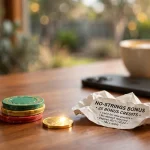
Compare the wagering requirement with the bonus value and the amount you must bet before withdrawing winnings. For example, a $500 bonus with a 40x requirement means $20,000 in bets; if the 35x requirement applies to a $500 deposit plus a $500 bonus, it means $35,000 in bets. Free spins may also cap cashable winnings.