A practical guide to mobile access, site claims, payment terms and the risks of using offshore casinos from Australia.

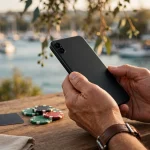
For Australian users, mobile access to offshore casino sites generally starts in a browser. You open the operator’s website, sign in to the same account you use on desktop, and use the mobile version of its pages. The site remains a website: the browser displays it, and you return to it through the browser’s address bar, bookmarks or browsing history.
That distinction matters because an app-like screen does not necessarily mean an app has been installed. Casinos that accept Australian players commonly provide browser access or a Progressive Web App (PWA), rather than a native mobile application. In Australia, casino apps are seldom available through the Google Play Store or Apple App Store, which helps explain why browser play is the usual starting point.
With browser play, the website is the point of access. You enter its address or follow a saved bookmark, then use the account associated with the site. The same account can be used on desktop, so moving between devices does not mean creating a separate mobile profile.
A browser session also makes the boundary between the site and the device clear: you are visiting a web page rather than installing a casino program. If you close the browser, you can return to the site later by opening it again. A bookmark can shorten that route, but it is still a saved link to the website, not an installed app.
Browser access is the default for many Australian mobile users partly because a casino application may not be offered through the main app stores. That does not prevent the website from being designed for a phone screen; it means the browser is still the software displaying it. Menus, account pages and games are delivered as part of the site’s mobile experience.
The practical result is that “casino on your phone” can describe several different setups. It may mean a website opened in a browser, a browser shortcut added to the home screen, or a separately installed application. The visual appearance alone does not tell you which one you are using.
A Progressive Web App, or PWA, is a shortcut to a casino website that is arranged to behave more like an app on a mobile device. You can add it from the casino website when an install or add-to-home-screen prompt appears: tap the prompt and confirm. The resulting icon gives you a direct way to open the site without first searching through browser tabs or typing its address.
The shortcut does not turn the casino website into a native application. It remains tied to the website, and the PWA is a way of opening that web experience in an app-like form. In other words, the icon changes how you reach the site; it does not, by itself, establish that a separate program has been installed from an app store.
This is useful when you want a direct home-screen entry but do not need a native app. It also helps avoid confusing a PWA with an application merely because both can have an icon and open in a phone-like layout. To identify the difference, consider how it was added: a PWA is installed from the casino website through the browser’s prompt, while a separately distributed app is installed as an application.
A casino app that is not available through the usual app stores may be offered for installation another way, such as by sideloading it. That is different from adding a PWA shortcut. A sideloaded app is an application installed outside the standard store route; a PWA remains a website shortcut.
Sideloading introduces a security risk. An app’s safety depends on the operator, so the fact that it is presented as a casino app is not proof that it is safe to install. You should treat an installation file with care and distinguish it from a browser prompt that adds a website to your home screen. If the operator’s identity or the origin of the file is unclear, do not assume the app is trustworthy.
These options are not interchangeable. Browser play opens the site inside a browser; a PWA provides a home-screen shortcut to that web service; a sideloaded app installs separate software on the device. The casinos discussed in this guide are offshore and crypto-friendly, but that description does not establish that any particular site is suitable for you. Confirm that a site accepts your location before depositing.
The website remains in the browser. Access is via address bar or bookmarks, and the same account is used across desktop and mobile.
A website shortcut added to the home screen. It behaves like an app but remains tied to the web experience.
Separate software installed outside standard app stores. These carry higher security risks and are not website shortcuts.
A licence label tells you which authority the operator says oversees its gambling business. It does not, by itself, establish that the site may offer casino games to people in Australia, or guarantee that a payment will work. Common jurisdictions named by offshore casinos that accept Australian players include Curaçao, Malta, and Gibraltar. The Malta Gaming Authority is often abbreviated to MGA.
Check the licence information on the site itself, rather than relying only on a badge or a comparison entry. Look for the name of the licensing body and the operator’s legal entity, then see whether the details are consistent across the footer, terms and conditions, and account documents. A mismatch is a reason to pause and seek clarification, not proof that the licence is valid or that a regulator will resolve a dispute for you. The licence’s jurisdiction also matters: it identifies the framework the operator claims to follow, not an Australian approval.
That description is not a recommendation or a guarantee about any particular site. Before you deposit, check directly with the operator that it accepts your location. Availability can depend on the site’s own rules, and a payment method appearing on a general information page does not mean it will be available to you at checkout.
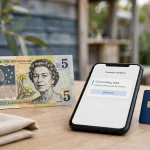
Deposit options and withdrawal options are not necessarily the same. A site may show a method as available for adding funds while restricting or excluding it for cashing out. Check the cashier and the payment terms before transferring money, and confirm the currency, any fees stated by the operator or payment provider, and the processing stages. Do not assume that a deposit method can also receive a withdrawal.
A specialist review describes PayID as a near-instant deposit option that is typically free, but that is a report about the method rather than a promise for every casino or transaction. The operator’s cashier should show whether PayID is currently supported for your account and whether any conditions apply. Payment availability can change, so the site’s current instructions are more useful than an old summary.
A specialist review also lists PayID, BPAY, cards and cryptocurrency among methods that may appear for mobile casino deposits, with processing times varying by method and operator. These are not guaranteed options for every Australian user. POLi should not be treated as a current local payment route: its Australian service ended in September 2023, so it no longer handles transactions within Australia. If a site still displays POLi, check with the operator rather than assuming the label means the service works.
E-wallets including MiFinity, Skrill and Neteller are used for both deposits and withdrawals. Whether one is available depends on the operator and account. Check the cashier’s current list and read the payment terms for any restrictions on moving money between methods. A method can be useful for funding an account yet unsuitable for receiving a withdrawal.
A withdrawal has more than one processing stage. The casino may first review the request; after it releases the funds, the payment provider or bank still has to process them. The time shown for a transfer can therefore be different from the total time before money reaches your account. Bank transfers may take as long as five business days, according to a specialist review, but the operator’s stated timing and the receiving bank’s processing still matter.
The first withdrawal commonly triggers identity checks. Be prepared for a request for a selfie or identity document and proof of address. Check what documents the site accepts, how to submit them securely, and whether verification must be completed before a withdrawal request can be approved. If the details on your account do not match your documents, processing may be delayed while the operator asks for clarification.
Before making a deposit, read the cashier information alongside the withdrawal terms. Confirm which methods can receive payouts, whether the operator imposes method-specific conditions, and what steps apply to identity checks. Save a copy of the relevant terms and the transaction confirmation so you can compare the operator’s instructions with what appears in your account.
A payment page is a description of the operator’s available routes, not evidence that every route is active or suitable for your circumstances. Treat the displayed options as provisional until you have confirmed them directly with the site. That check can prevent a basic mismatch—for example, funding through a method that the operator does not support for withdrawals—before money enters the account.
Australian law draws a distinction between the business providing an online casino service and the person who uses it. Under the *Interactive Gambling Act 2001*, an operator must not offer online casino-style games to people who are physically in Australia. The prohibition covers the service supplied to customers here; it does not make an individual Australian player’s act of playing at an offshore casino illegal under that Act.
Those two points can be true at the same time. A site may be operated from outside Australia, but if it offers casino-style games to people located in Australia, the operator’s conduct falls within the prohibition. The operator’s overseas location does not turn the service into one that can lawfully be supplied to Australian users. Conversely, the restriction on operators does not mean that an individual player commits an offence simply by playing.
This distinction matters when you read descriptions of an offshore casino. A site’s own terms, its location or its description of its service cannot change the Australian rule about offering casino games to people here. Nor should the fact that a site can be reached be treated as proof that its service is permitted. Legal status depends on what the operator provides and where its customers are located, not just on the words used to describe the business.
The Australian Communications and Media Authority (ACMA) enforces restrictions on illegal gambling services, including by blocking access to sites that breach the rules. A block is a regulatory measure aimed at limiting access to the service. It does not alter the distinction between the operator’s obligations and the individual player’s position under the *Interactive Gambling Act 2001*.
A blocked page also does not, by itself, tell you everything about the reason for the block or the status of a particular account. It indicates that access to the site has been restricted through an enforcement action. If a site becomes inaccessible, repeatedly trying different routes does not change the operator’s legal obligations or establish that the service is authorised for Australian users.
Legal Distinction
An operator is prohibited from offering casino-style games to people in Australia, regardless of whether the site is reachable or based offshore.
The central point is not whether the website loads on a particular device. It is whether the operator is offering prohibited casino-style gambling to people in Australia. Access and legality are separate questions: a site might be reachable without that making the operator’s conduct lawful, while a block may prevent a user from reaching a service without changing the rule that applies to the operator.
Descriptions that refer to a US offshore casino, or to casinos based offshore from the United States, concern a different geographic frame. They do not confirm that the operator accepts customers located in Australia. A site may be described in relation to the United States because of its intended audience, business location or other market context; none of those labels answers whether it accepts Australian users.
The same caution applies when you encounter a service described as an offshore casino for Australia. The phrase may indicate that the operator is outside the country, but it does not establish that the operator is legally entitled to provide casino games to people here. A marketing label is not a legal determination, and an operator’s statement about where it is based does not override the Australian prohibition.
If a page uses language about US players or US-facing services, read it as information about that market, not as evidence about Australian eligibility. The reverse is also true: a reference to Australia does not prove that a service may lawfully offer games to Australians. Operator location and customer location are different facts, and the law’s restriction concerns the service offered to people physically in Australia.
For an individual, the legal distinction should not be mistaken for an endorsement or a guarantee about what will happen in a dispute. The Act does not make playing at an offshore casino illegal for the individual, but that does not make the operator’s service lawful in Australia or provide the player with the protections attached to a locally authorised service. The operator remains responsible for complying with the rules that apply to its offer.
When assessing a claim about an offshore casino, separate three questions: where the operator is based, who it says it serves, and whether it offers casino-style games to people in Australia. A US-related description answers none of the Australian legal questions on its own. And a site’s availability, branding or choice of audience cannot convert a prohibited offer to Australian users into a permitted one.
Access can fail before you reach the cashier. The Australian Communications and Media Authority blocks access to illegal gambling sites, so an offshore casino may be unavailable from an Australian connection. A blocked page does not necessarily indicate a fault with your phone or account. Do not use a VPN to get around a block: accessing a casino that way may breach its terms, void winnings and result in account closure.
If the site loads but a deposit is declined, the cause may be the payment route rather than the casino account. Specialist reviews report that some Australian banks block or flag gambling-related card charges. A declined card transaction may therefore reflect the bank’s handling of the charge. Repeated attempts do not resolve a bank restriction and can make it harder to identify which part of the transaction failed.
VPN Usage
Do not use a VPN to bypass blocks, as this may breach terms, void your winnings, and lead to account closure.
Before depositing, check how the site treats each method at both ends of a transaction. Specialist reviews note that some casinos require a withdrawal to use the same method as the deposit, while other methods are deposit-only. That distinction can leave you unable to withdraw through the route you expected, even if the deposit succeeded. Read the cashier’s withdrawal rules before choosing a payment method, and check whether the available withdrawal route suits you.
A withdrawal request can also pause while the casino verifies your identity. The first withdrawal commonly triggers KYC checks, which may require identification such as a selfie or identity document, as well as proof of address. The casino may not release funds until the requested documents have been reviewed. Make sure the details on your account match your documents, and follow the site’s instructions for submitting them. A delay at this stage is different from a payment provider taking time to transfer an approved withdrawal.
The amount you request may affect how quickly you receive the full balance. Specialist reviews report that some casinos set weekly or monthly withdrawal caps, with stated weekly limits in the range of $4,000–$10,000. If a request exceeds a site’s cap, it may be paid in separate instalments rather than as one transfer. Check the current limit and whether it applies to your account before relying on a particular payment schedule.
The casino’s own pending period is another separate stage. A request may remain unprocessed by the operator before it is sent to a payment provider. Only after approval does the provider’s transfer time begin. If a withdrawal appears delayed, check its status with the casino and establish whether it is still pending, awaiting verification or already being processed. Those stages have different causes and require different follow-up.
Access to responsible-gambling controls is also important when assessing the practical risks of an offshore account. Specialist reviews describe tools such as deposit, loss and wager limits, session time limits and self-exclusion. Check which controls are available and how they take effect. A limit that is difficult to find or that does not apply immediately may not work as you expect when you need it.
There is a significant difference between a payment dispute with a locally regulated service and a dispute with an offshore casino. If an offshore operator refuses to pay winnings, there is no Australian government body for you to complain to and rely on for recovery. That leaves you dependent on the operator’s own process and whatever remedies exist in its licensing jurisdiction. Consider this risk before depositing; a displayed licence or a successful earlier payment does not guarantee that a later dispute will be resolved in your favour.
Choosing an offshore casino involves checking the details that matter to you, including licensing and any stated deposit or payout information. Use these verdicts as a concise reference when considering options for Australian players in 2026.
7Bit Casino
7Bit Casino is licensed in Curacao and operated by Dama N.V.
SpinsUp
SpinsUp holds Curacao Gaming Control Board licence OGL/2023/174/0082 and is associated with Dama N.V.
Playfina Casino
Playfina Casino is licensed by Curacao eGaming and has been operated by Hollycorn N.V. since 2017. Its minimum deposit is A$20–30, depending on the offer.
Ricky Casino
Ricky Casino lists a minimum deposit of A$20, or A$30 to qualify for the bonus. Its stated payout times are under an hour for crypto and 1–3 business days for PayID.
Golden Pokies
Golden Pokies is licensed in Curacao.
Vegaz Casino
Vegaz Casino holds Curacao licence OGL/2024/1335/0780 and lists a minimum deposit of EUR 20.
Neospin
Neospin holds Curacao Gaming Control Board licence OGL/2023/176/0095 and is operated by Hollycorn N.V.
JustCasino
JustCasino is licensed by the Curacao Gaming Control Board.
Bizzo Casino
Bizzo Casino is licensed by the Curacao Gaming Control Board and operated by TechSolutions Group N.V.
SkyCrown
SkyCrown is licensed by the Tobique Gaming Commission. Its stated payout times are around 10–15 minutes for crypto and 1–5 days for fiat, with a minimum deposit of A$30.
“Offshore” describes where the casino operator is based, not where you are sitting when you visit its website. An offshore casino is run from outside Australia. The term does not, by itself, tell you which country’s rules apply to the operator, whether the site is licensed, or whether it accepts people located in Australia. Those are separate questions.
The distinction matters because an operator’s location and a customer’s location can trigger different legal considerations. A site may be operated overseas, but if it offers online casino-style games to people in Australia, the Australian rule concerning the operator still applies. Under the Interactive Gambling Act 2001, gambling operators are prohibited from offering those games to users in Australia. Calling a service “offshore” does not create an exception to that prohibition.
The word also does not determine an individual player’s legal position. Under the same Act, playing at an offshore mobile casino is not illegal for an individual Australian player. That point is narrower than saying the service is lawful in Australia: the operator’s prohibition and the individual player’s position are different parts of the legal framework. A punter should not treat the absence of a player offence as approval of the operator or a guarantee that a site can lawfully serve Australian users.
Under the Interactive Gambling Act 2001, while operators are prohibited from offering services in Australia, the act of playing at an offshore casino is not illegal for the individual player.
This is the central distinction behind the question of whether an offshore casino is legal. The answer depends on what is being asked. If the question is whether an operator may offer online casino-style games to people in Australia, the Act prohibits it. If the question is whether an individual Australian player commits an offence simply by playing at an offshore casino, the Act does not make that act illegal for the player. Using one answer to stand in for the other produces a misleading description.
“Offshore” is therefore a location label, not a quality mark or a legal status. It does not establish that a casino is safe, properly licensed, available to Australian residents, or able to resolve a dispute. Nor does the phrase “offshore crypto-friendly casino” change the legal distinction: “crypto-friendly” describes a possible payment feature, while “offshore” describes the operator’s location. Neither term determines whether the operator may offer casino-style games to someone in Australia.
When you encounter the term, identify whose conduct is being discussed and where the operator is based. Then keep that description separate from the question of what Australian law allows the operator to provide. The player’s position under the Act should not be confused with the operator’s prohibition, and a location label should not be mistaken for permission to operate in Australia.
Treat an operator comparison as a starting point for checking details, not as confirmation that a site is suitable for you. The casinos discussed are offshore and crypto-friendly; that description does not establish that any operator may legally offer its services in Australia or will accept your account.
Read the stated licence jurisdiction and payout information as claims to verify against the operator’s own current terms. Common jurisdictions named in this context include Curaçao, the Malta Gaming Authority and Gibraltar. A licence reference alone does not tell you whether the site accepts Australian residents, what conditions apply to withdrawals or whether a payment will succeed. Those details can differ between operators and may change.
Before depositing, contact the site directly and obtain clear confirmation that it accepts customers located in Australia. Do not treat an entry in a guide as permission to register or as proof that access will remain available. The Australian Communications and Media Authority actively blocks access to illegal gambling sites, so a page loading successfully does not establish that the service is authorised to operate here.
The guide cannot remove the legal or practical risks. Australian law prohibits operators from offering online casino-style games to people in Australia, although playing at an offshore casino is not illegal for an individual under the Interactive Gambling Act 2001. Access, deposits and withdrawals may still encounter restrictions. If an offshore operator refuses to pay winnings, there is no Australian government body to which you can complain for recovery.
Do not use a VPN to get around a block or a location restriction. An operator may treat that as a breach of its terms, with winnings at risk and the account liable to closure. Verify your location eligibility with the operator before depositing, and do not assume a comparison can substitute for that check.
A ranking is a conclusion, not evidence. To judge a claim about an offshore casino, look for details you can verify on the operator’s own site, then compare them with the wording of the claim. A specific licence jurisdiction is more useful than a broad assurance that a site is “fully licensed”. Common jurisdictions include Curaçao, Malta Gaming Authority (MGA) and Gibraltar. Check that the stated jurisdiction is identifiable and that the site explains which entity operates the service.
Withdrawal conditions are another testable detail. Read the cashier information and terms for the permitted withdrawal methods, processing steps and any weekly or monthly cap. A specialist casino review describes some limits in the range of $4,000–$10,000 per week; treat that as a claim to verify against the particular operator’s current terms, not a standard applying to every site. A headline payout promise means little if the rules set a lower cap or add conditions.
Separate evidence from judgement. A reviewer may label an operator “best”, but that label does not establish that its licence, payment rules or service will suit your circumstances. Look for the underlying terms and note whether the information is attributed to the operator or independently checked. Any casinos described as recommendations are offshore and crypto-friendly; neither description is a guarantee of access, payment or recourse.
Before depositing, confirm directly with the site that it accepts your location. Using a VPN to reach a blocked casino may void winnings and lead to account closure. If an offshore casino refuses to pay, there is no Australian government body to complain to for recovery. Treat rankings as prompts for checking specific claims, not as proof that a casino is safe or suitable.
A general list can describe casinos, but it cannot establish whether a particular operator will accept you from your current location. Availability is determined by the casino’s own location rules and the access conditions that apply when you visit. A name appearing on a list is not confirmation that you can register, deposit or use the service from Australia.
Access can also fail before you reach the casino’s own checks. The Australian Communications and Media Authority (ACMA) blocks access to gambling sites that operate illegally, so a site may be inaccessible through your connection even if it appears in a directory. A listing cannot override that block or guarantee that the site will remain reachable.
Before depositing, check directly with the casino that it accepts customers located in Australia. Read its location and account rules, and do not treat a successful page load or registration form as proof that your location is permitted. If the operator does not clearly confirm eligibility, do not proceed with a deposit.
A VPN is not a safe way to get around a block or a location restriction. It may make your connection appear to come from somewhere else, but it does not change your actual location or the casino’s rules. If the operator detects VPN use, it may close your account and void winnings. Concealing your location can therefore turn an access problem into a dispute over your account and balance.
Treat any list as information to verify, not permission to play. The decisive check is whether the operator accepts your location under its current rules, without attempting to disguise where you are connecting from.
A bonus is not cash you can withdraw on receipt. Its terms determine whether it can be used, what activity is required before withdrawal, and what happens if you do not meet the conditions. Treat the displayed amount as only one part of the calculation.
Check the wagering requirement first. A specialist casino review describes welcome-bonus requirements in the range of 30x to 50x the bonus amount, and characterises requirements above 40x as steep. The operator’s wording matters: confirm whether the multiplier applies to the bonus alone or to the bonus and deposit together. A larger multiplier means more wagering is required before any eligible balance can be withdrawn.
Next, check the minimum deposit, if one applies. A no-deposit offer may avoid that particular condition, but it can still have wagering rules, restricted games, an expiry date and a cap on cashout. Game restrictions matter because activity on excluded games may not count towards the requirement, or may breach the terms. Do not assume that every game contributes equally.
Expiry rules determine how long you have to complete the conditions. A specialist review reports that many bonuses have a 7–10-day clearance period; if the deadline is missed, the bonus can be forfeited. Check when the clock starts and whether the operator’s terms say that any winnings linked to the bonus are also affected.
Before claiming, read the complete terms for the wagering requirement, eligible and excluded games, expiry date, minimum deposit and cashout cap. If any condition is unclear, ask the operator to explain it in writing before accepting the offer. Compare the required play and time limit with what you would otherwise choose to do; do not increase your spending to chase a bonus.
Crypto can be one route for moving money between an offshore crypto-friendly casino and a digital wallet. The withdrawal estimate is not the same as a guarantee that funds will reach your wallet within that time. A specialist casino review reports that crypto and e-wallet withdrawals may be processed in under 24 hours. That describes the casino’s processing step; it does not necessarily include any time the casino holds a request as pending.
The distinction matters because the clock may not start when you press “withdraw”. A casino can keep a request pending before approving and sending it. A specialist review reports that e-wallet withdrawals may arrive within 24 hours after this pending period, but the period itself can add time. Check the operator’s stated process and timing for the specific method before depositing.
For comparison, bank-transfer withdrawals can take up to five business days. That is a possible transfer timeframe, not a promise about how quickly the casino will approve a request. The total wait can involve both the operator’s handling and the payment provider’s transfer.
Using cryptocurrency does not remove identity checks or other withdrawal conditions. A first withdrawal may require KYC, such as identity documents, a selfie and proof of address. The casino may also apply method-specific rules, so confirm whether the crypto option is available for withdrawals, not only deposits, and whether you must withdraw through the same method used to deposit.
Before depositing, confirm directly that the site accepts your location. Using a VPN to reach a blocked casino may void winnings and lead to account closure. If an offshore casino refuses to pay, there is no Australian government body to complain to. These limits matter regardless of the payment route.
Operators set their own location rules, so some accept Australian players while others do not. A licence from an offshore jurisdiction does not mean a casino is approved to offer games in Australia, and the ACMA blocks access to illegal gambling sites.
Browser play is the usual option for Australian players because casino apps are rarely listed in the main app stores. You can use your desktop account in the mobile browser, or add a PWA shortcut to your home screen for quicker access.
A PWA is a casino website shortcut that opens in an app-like format on your phone. You add it from the casino website using the browser’s install or add-to-home-screen prompt; it is not a separate native app.
Accept one only if its wagering requirement, minimum deposit and deadline suit you. Requirements commonly range from 30x to 50x the bonus amount, and many bonuses must be cleared within 7–10 days.
You must wager the required multiple of the bonus amount before the bonus deadline; common requirements are 30x to 50x, with anything above 40x considered steep. Many offers give you 7–10 days, and missing the deadline means losing the bonus.