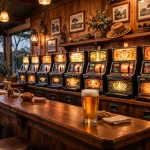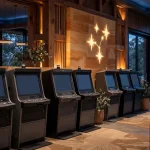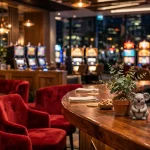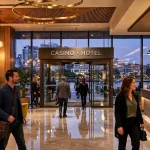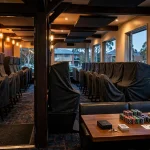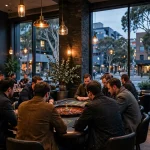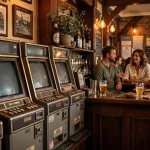
In Australia, the phrase usually describes a casino gaming-machine area, while online labels do not establish a separate licence.
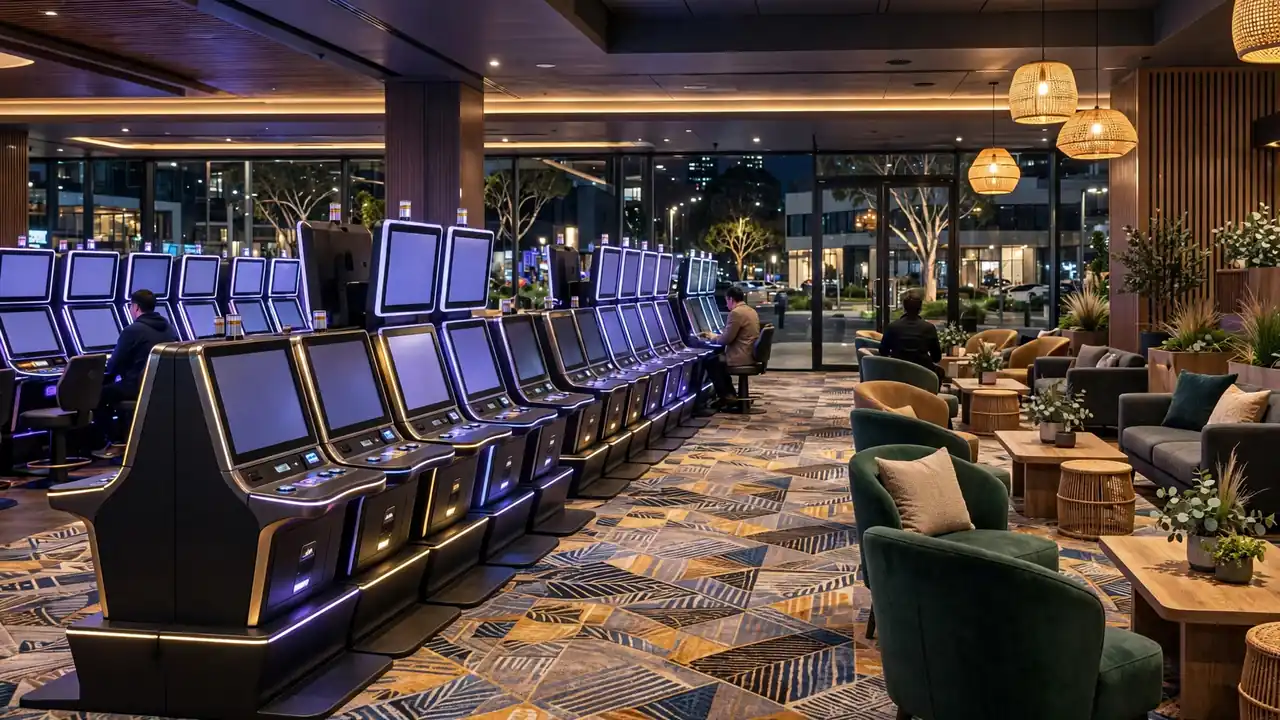
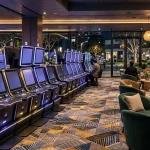
In Australia, “pokies parlour” is an informal way to describe an area of a casino where electronic gaming machines are located. It does not, by itself, identify a separate kind of casino or a distinct licence. The word “parlour” points to a part of a physical venue; the legal status of the venue comes from its casino licence, not from the name used for that area.
This distinction matters because the same phrase can appear in descriptions of very different things. A person might use it to mean the gaming-machine floor inside a casino, while a website might use similar wording as a label for an online service. Those uses are not interchangeable. A phrase that sounds like a venue description does not establish that an online casino exists as a separately licensed category in Australia.
Australian casinos are physical businesses authorised under state or territory arrangements. Each property operates under a licence issued by the jurisdiction where it is located. That local licence governs the casino as a venue; it does not transform every informal name for an internal area into a separate form of licensed operation. If you are interpreting a reference to a “pokie parlour”, first identify whether it describes a room or gaming area at a physical casino, or is being used as a promotional label for something online.
If you’re looking for an online pokies-style casino in Australia in 2026, this list gives you a concise reference point for the operators and the details available about them. Check the information relevant to you before choosing where to play.
7Bit Casino
7Bit Casino is listed as operating under a Curacao licence, with Dama N.V. identified as its operator.
SpinsUp
SpinsUp is associated with Curacao Gaming Control Board licence OGL/2023/174/0082, with Dama N.V. named in the supplied details.
Playfina Casino
Playfina Casino is associated with Curacao eGaming and Hollycorn N.V., with the supplied details dating this association to 2017. Its minimum deposit is A$20–30, depending on the offer.
Ricky Casino
Ricky Casino lists crypto payouts in under an hour and PayID payouts in 1–3 business days. The minimum deposit is A$20, or A$30 to qualify for the bonus.
Golden Pokies
Golden Pokies is listed with a Curacao licence. No further operator details are provided here.
Vegaz Casino
Vegaz Casino is associated with Curacao licence OGL/2024/1335/0780. Its stated minimum deposit is EUR 20.
Neospin
Neospin is associated with Curacao Gaming Control Board licence OGL/2023/176/0095, with Hollycorn N.V. named in the supplied details.
JustCasino
JustCasino is listed as holding a Curacao Gaming Control Board licence. No further operator details are provided here.
Bizzo Casino
Bizzo Casino is associated with the Curacao Gaming Control Board, with TechSolutions Group N.V. identified in the supplied details.
SkyCrown
SkyCrown is associated with the Tobique Gaming Commission. Its stated payout times are around 10–15 minutes for crypto and 1–5 days for fiat, and its minimum deposit is A$30.
The term is also less formal than the language used in licensing and venue administration. “Pokies” is familiar Australian wording for gaming machines, but “parlour” can be a loose descriptive term rather than the official name of a particular facility. A casino may organise its gaming floor into areas, yet that layout does not necessarily make each area a distinct venue or licence. The useful question is what the phrase refers to in context: the physical place, the equipment inside it, or an online product described with similar words.
This helps avoid a common category error. A casino gaming-machine area is part of a bricks-and-mortar casino, with the venue’s operation governed by its local jurisdiction. An online service is not the same thing merely because it uses “parlour” or “casino” in its wording. In Australia, the Interactive Gambling Act 2001 prohibits operators from providing real-money online casino games to people physically in the country. The physical meaning of “pokies parlour” should therefore not be read as evidence that a corresponding online casino category is authorised.
The scale of the physical sector can provide useful context, but individual counts should be read according to their source. One specialist review reports more than 20 full-scale casinos across Australia’s eight states. That figure is the review’s reported count, not a definition of “pokies parlour” and not a count of parlours within casinos. It also does not mean every casino has an area formally called a parlour. A national venue count and a venue’s internal floor plan measure different things.
When a description uses the phrase, check what its surrounding information actually identifies. A reference to a casino property, its physical address, or an area within the venue points to a land-based setting. A label on a website, by contrast, tells you only how that site chooses to describe its service. The wording alone does not establish the service’s legal status, nor does it prove that the online and physical meanings refer to the same operation.
A simple way to read the phrase is to separate three layers. The first is the licensed casino property. The second is the area within that property where gaming machines are situated. The third is any online use of similar wording. The first two belong to the physical venue context; the third must be assessed as an online service, not inferred to be lawful from a familiar venue-style name.
So, in an Australian casino context, “pokies parlour” most naturally describes a gaming-machine area within a physical casino, though the wording itself is informal. It is not a standalone licence category, and it does not supply evidence about an online service. Keep the venue, its internal area, and any online label separate, and the phrase becomes easier to interpret without treating similar wording as proof of equivalent status.
A sign-up bonus or no-deposit offer is a promotional claim, not evidence that an online casino is authorised to serve people in Australia. The wording may suggest that a new account receives a benefit without an initial payment, or that a bonus is tied to registration. But the legal question is not whether the offer sounds attractive or whether an account can be opened. It is what service is being offered to someone physically located in Australia.
Under the Interactive Gambling Act 2001, operators must not provide real-money online casino games to people in Australia. That includes online slots, poker and table games. A promotion attached to such a service does not change the nature of the underlying activity: a “pokies parlour” bonus advertised online still needs to be understood in the context of the interactive gambling service it promotes. Calling an offer free, introductory or available only to new customers does not itself make the service lawful.
This distinction matters because promotion and authorisation are separate issues. A bonus page can describe an offer, explain how it is claimed, or invite you to register. None of those statements establishes that the operator may provide online casino gambling in Australia. Promotional wording is created by the service seeking customers; it is not a regulatory decision. Treating the offer itself as proof of approval would confuse the operator’s claim with the law that applies to the service.
The Australian Communications and Media Authority, or ACMA, administers federal enforcement of the Interactive Gambling Act 2001 and monitors whether interactive gambling services comply with federal rules. Its role is distinct from the state and territory regulation of physical casino properties. For online casino-style services, the relevant federal framework prohibits operators from providing the specified real-money games to people in Australia.
ACMA can ask Australian internet service providers to block websites that provide prohibited interactive gambling services or advertise them in Australia. That mechanism is one part of enforcement; it does not turn a promotional claim into evidence of authorisation. ACMA has reported blocking more than 1,455 illegal gambling and affiliate websites following enforcement activity since November 2019. The figure includes affiliate websites as well as gambling services, so it should not be read as a count of casino operators alone.
There is also a difference in published totals for services that have withdrawn since ACMA began enforcing the rules in 2017. One reported figure is more than 210, while another is over 190. The point relevant to a bonus claim is that enforcement has involved services leaving the Australian market, not that an advertised offer has been approved.
Read a sign-up or no-deposit claim as information about the promotion being presented, not as a status label for the provider. The wording may tell you what the advertiser says a new customer can receive, but it cannot answer whether the associated real-money casino service is permitted to operate for people in Australia. A bonus does not create an exception to the federal prohibition.
The distinction also applies when a promotion uses “free” language. That word describes the advertiser’s framing of the offer; it does not determine whether the activity is a prohibited interactive gambling service. If the offer is linked to online casino games, the relevant legal question remains the nature of those games and the operator’s provision of them to people in Australia. An introductory benefit cannot convert prohibited online casino gambling into an authorised service.
Legal Prohibition
Under the Interactive Gambling Act 2001, it is prohibited for operators to provide real-money online casino games to people physically located in Australia.
ACMA’s enforcement function is directed at compliance with federal interactive gambling law, including action concerning services that provide or advertise prohibited gambling. Its blocking requests and enforcement actions therefore belong to the regulatory picture, while the presence of a bonus belongs to the advertiser’s claims. Keeping those categories separate makes the offer easier to assess: promotional language describes what a site says it provides; it does not establish permission under Australian law.
A site loading in your browser tells you that a connection to that address succeeded. It does not tell you whether the service is authorised to provide gambling to people in Australia. The same distinction applies if the site lets you register, accepts account details or displays games: those are features of the website, not evidence of Australian licensing.
That distinction matters because Australian law does not provide for real-money online casino games to be offered to people physically in Australia. Under the Interactive Gambling Act 2001, operators cannot provide online casino-style games such as slots, poker, blackjack or roulette to Australian customers. A site’s claims about its overseas status, or its ability to process registrations, do not change that rule.
The Australian Communications and Media Authority (ACMA) enforces the federal interactive gambling laws. It can investigate services that provide or advertise prohibited online gambling and ask internet service providers to block access to them. Blocking is an enforcement measure: it can make an address harder to reach, but it is not a licensing system and does not certify other sites that remain accessible.
A specialist review reports ACMA blocking action involving illegal gambling services and Fair Go-related alternate domains. That reference should be read narrowly: it describes enforcement against particular services or addresses, not approval of an online casino. Nor does it establish that Fair Go is an Australian-licensed wagering provider.
Blocking can affect which domain names resolve through Australian internet service providers. A service may also appear at a different address over time. A specialist review notes that alternate addresses can emerge as access conditions change. A new address is still only an address; it does not provide evidence that the underlying service has Australian authorisation. The same is true if one domain fails while another opens.
This can make online availability look like a test of legality when it is not. A page may load because a block does not apply to that address, because the address has changed, or because the access route differs. None of those outcomes establishes a licence. Conversely, a blocked page does not mean every site with similar wording has the same status. The relevant issue is the service being offered and the law that applies to it, not whether a browser can display its pages.
The word “free” also needs careful interpretation. A free-to-play page, a demonstration mode and a real-money gambling service are not interchangeable descriptions. Seeing games without an immediate payment step does not establish that the operator is authorised to provide real-money casino gambling in Australia, or that a later account feature is permitted. Read the actual terms and identify what the site says the account can do; do not infer regulatory status from a free-access label.
For a reader assessing an online “pokies parlour” claim, separate three things: the name used in the promotion, the technical route by which the website is reached, and the legal character of the service. Only the first two are visible from the page itself. They cannot establish Australian licensing, and an alternate domain cannot turn a prohibited real-money casino service into an authorised one.
Words such as “free chips” and “free spins” can describe different things, so the phrase alone does not tell you what is being offered. It may be promotional wording about an online service, a reference to activity inside a physical casino, or simply a headline that does not explain its conditions. Before treating it as a real benefit, identify the service and setting the words refer to.
A physical casino’s gaming area is part of a licensed venue. A claim about chips or spins does not, by itself, show that a visitor receives anything without charge, can use a particular game, or can enter a particular area. Those are separate questions from whether the venue operates. All major Australian casinos are open around the clock, but continuous operating hours do not mean every activity, promotion or area is available to every visitor at all times.
The distinction matters because “free” can be ambiguous. It might mean that no payment is requested at the point of use, while other conditions still apply. Or it may be a broad promotional label without a clear explanation of what the recipient gets, where it can be used, or whether it relates to a physical venue at all. Do not infer those details from the words “free chips” or “free spins”; look for a clear description of the actual service and its terms.
If the wording points to online casino-style play, it should not be read as evidence that such an offer is available or authorised for people in Australia. The Interactive Gambling Act 2001 prohibits operators from providing real-money online casino games to people physically located in Australia. A promotional phrase does not change that legal position. Nor does a reference to a physical casino establish that an online service is connected to, or operated under, that venue’s licence.
For a claim about an in-person venue, check whether it names a physical casino and explains what the phrase means in that setting. Is it describing a feature of the venue, an activity, or an online promotion? Does the wording identify who may use it and where? If those basics are absent, the claim is too vague to establish a usable benefit. Treat it as unverified language, not as a promise.
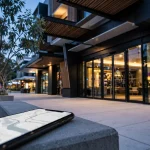
The same care applies when a page combines images of a casino floor with online promotional terms. Visuals can make separate services appear connected even when the text does not establish that relationship. Read the wording, not just the design: a photograph of a physical gaming area does not prove that an online offer belongs to that venue or is lawful in Australia.
In short, separate the setting from the sales phrase. A casino’s 24-hour operation describes its opening hours; it does not validate a “free” claim. The useful question is what the claim refers to, where it can be used, and whether that activity is legally permitted in Australia.
A review of a casino’s gaming area can mix checkable venue information with opinion and promotional language. Read each statement according to what it describes: a physical feature, an entry condition, a service, or an impression. A confident tone does not make a claim more reliable; useful detail lets you identify what could be checked and where.
Start with the review’s subject. “Pokies parlour” may describe the gaming-machine area within a casino, not a separate venue or a complete account of the property. Check whether the writer is discussing that area specifically or using the phrase for the casino as a whole. A review that shifts between these meanings can make a narrow observation sound like a claim about every part of the venue.
Descriptions such as the layout, signs, facilities and access arrangements are potentially verifiable. Look for enough context to understand what the reviewer saw, rather than broad labels such as “excellent” or “the best.” Those are opinions unless the review explains the criteria behind them. The same applies to claims about service or atmosphere: they may describe one person’s experience, but they do not establish what every visitor will encounter.
Pay attention to whether the review distinguishes direct observation from information supplied by the venue. A detail copied from promotional material is not independent confirmation simply because it appears in a review. When practical, compare factual statements with the casino’s own published visitor information. If the two descriptions differ, note exactly what conflicts instead of treating either wording as settled.
Age is one concrete point a reader can assess. The minimum age for entry to casinos in Australia is 18. A review that suggests otherwise should not be treated as a reliable guide to entry. Also distinguish the age rule from other access information: a statement about who may enter does not, by itself, explain identification checks or the conditions for access to a particular area.
Look for wording that makes a limited condition sound universal. “The venue offers” may refer to one part of the property, while a broad claim about what all visitors can use may go further than the evidence shown. A careful review identifies the area or service being described and avoids turning a single visit into a rule for every visit.
Phrases promising a superior experience, special treatment or an unusually good visit need supporting detail. Ask what observable fact would confirm the statement. If none is given, classify it as promotion or personal opinion rather than a verified venue feature. Images and vivid descriptions can help convey appearance, but they do not establish operating conditions or access terms.
A useful review makes its limits visible: what was seen, what came from published venue information, and what remains an impression. That distinction lets you use the review for orientation without mistaking persuasive wording for dependable information. When the account leaves a key detail unclear, the uncertainty is part of what you should take from it.
Australia’s gambling facilities are not confined to capital cities. A specialist gambling review reports facilities across 147 Australian cities, but that figure is a snapshot from one review, not a fixed national count. Definitions also matter: a count of gambling facilities may include more than full-scale casinos, so it should not be read as a count of casino properties.
The same specialist review identifies Sydney, New South Wales, as the country’s largest gambling city, listing 11 facilities there. This describes a concentration within one city rather than the distribution of venues across the state. When comparing city totals, check whether the source counts only casinos or includes other types of gambling facility; otherwise, two apparently similar totals may measure different things.
Regional examples show how casino locations can be tied to distinct towns and resort areas. Lasseters Casino is at 93 Barrett Drive in Alice Springs, Northern Territory. A specialist gambling review lists three casinos across three Northern Territory cities and identifies Alice Springs as the city with the most, at one casino. Those figures are the review’s reported snapshot, not a claim that the territory’s venue map cannot change.
On the east coast, Jupiters Gold Coast Casino & Hotel is located on Broadbeach Island on the Gold Coast. This places the venue in a coastal destination rather than in a state capital. In Tasmania, Country Club Casino is listed on Country Club Avenue in Prospect, within Meander Valley. The address illustrates why a search for casino locations may lead to a locality or regional area rather than a city centre.
These examples also show why place names should be read at the right scale. “Gold Coast” refers to a broader destination, while Broadbeach Island gives a more specific location. “Prospect” is the locality named in the Country Club Casino listing, and Meander Valley provides the regional context. For Alice Springs, the street address makes the venue’s location more precise than the city name alone.
Australia’s casino sector is regulated by state and territory governments, with each property operating under a licence from its local jurisdiction. As a result, a national location list brings together venues governed in different places; it does not mean that one national authority issues every casino licence. The location of a venue tells you which jurisdiction’s framework is relevant, while the facility count tells you only how many places a particular source has included.
Treat changing totals as dated descriptions, not permanent features of the map. A specialist review’s city count can help orient you, but the names and addresses are more useful for identifying specific regional examples. For a location check, distinguish the city or destination from the suburb, island or locality, then confirm that the venue name and address refer to the same place.
A bonus claim attached to a casino name can refer to different things, and the wording alone does not establish what is being offered or whether it is lawful. It may be general promotional language, a reference to a physical venue, or a claim about an online service. Treat those as separate categories rather than assuming a venue’s name makes an online offer part of its operations.
A casino's state or territory licence applies only to the physical property and its authorised activities; it does not grant permission to provide online casino games.
In Australia, each casino property is licensed by the state or territory where it operates. That licence relates to the particular venue and its authorised activities. It does not create a general permission for the same business, or another business using a similar name, to provide casino games online to people in Australia.
The distinction matters when you encounter phrases such as a parlour bonus or a casino bonus. A claim does not identify the operator, the service being promoted, or the relevant licence simply by using familiar venue language. Nor does it establish that a benefit is available to you. Read the wording for what it actually says: whether it describes a physical property or an online gambling service, and which entity is making the claim. Do not infer approval from branding, a venue address, or an association with a licensed property.
The federal rules are separate from state and territory casino licensing. The Interactive Gambling Act 2001 prohibits operators from providing real-money online casino games to people located in Australia. As a result, a bonus advertised in connection with online casino play should not be treated as authorised merely because the wording refers to an Australian casino or a physical gaming area.
This is different from assessing the terms of a particular sign-up or no-deposit claim: the first question here is what kind of service the general bonus wording points to. If it points to a physical venue, its casino licence is a matter for the relevant local jurisdiction. If it points to online casino play, the venue’s licence does not make that online service lawful.
Keep the categories distinct when evaluating a claim. Venue information concerns a licensed physical property; online promotional wording concerns a service and its operator. The word “bonus” settles neither the service’s status nor its connection to a licensed venue.
“VIP” describes an access category or service arrangement; it does not mean that every part of a casino is open to every visitor. A casino may distinguish general gaming areas from spaces reserved for members or invited guests. The label alone does not tell you who qualifies, what identification is required, or whether access must be arranged in advance. Those conditions depend on the venue’s rules.
This distinction matters when a page describes a VIP parlour casino. Treat “VIP” as a claim about entry or status, not as proof that the venue is public, that a particular area is available to walk-in visitors, or that the term has a standard meaning across Australia. Check the specific venue’s access information before relying on the wording. If the page does not explain the conditions, the label leaves the practical question unanswered.
Access categories and licensing are separate matters. Australian casinos are licensed by the state or territory where each property operates. That local licence governs the property’s operation; it does not, by itself, explain the entry rules for each room or membership category. Conversely, a restricted area does not indicate a separate kind of casino licence. To understand the status of a venue, keep the licensing question distinct from the question of who may enter a particular area.
The nationwide minimum age for casino entry is 18. A VIP label does not remove that age requirement, nor does it establish that someone under 18 can enter a gaming area. When assessing an access claim, look for clear venue-specific terms and distinguish them from promotional language. If the only information is a VIP description, you cannot infer that general admission is available or that entry is guaranteed.
The phrase “parlour pokies” points to a physical gaming-machine area, but it does not tell you how many machines a particular venue has. A national figure gives a more concrete sense of the equipment across Australian casinos: 3,308 machines are both endorsed on venue licences and installed in casinos.
Those two conditions matter. The figure is not simply a count of machines that might be available, planned or advertised. It describes equipment recorded as installed and covered by casino venue licences. It is also an aggregate across Australia, not a breakdown for an individual casino or a specific gaming area. You therefore cannot use it to infer the size of a particular parlour.
The total describes scale, not the layout or operation of a venue. It does not show how machines are arranged, whether every machine is in the same area, or how many are operating at a given time. Nor does the national count establish that a venue has a separate licence for a “parlour”; the relevant detail is the venue’s own licensing and physical setup.
For a reader, the distinction is practical: “parlour” is a way of referring to an area within a casino, while 3,308 is a national equipment count. The first describes a place; the second measures the wider licensed and installed machine base. Neither figure tells you what an individual visit will involve.
That boundary also prevents a common misreading. A national total cannot substantiate a claim about a particular casino’s capacity or the number of machines in a particular room. Those are venue-specific details, whereas the total only gives a broad measure of the physical gaming-machine environment in Australian casinos.
A “real-money” label describes how a service says its games work; it does not establish that the service is authorised to provide them to people in Australia. The Interactive Gambling Act 2001 prohibits operators from offering real-money online casino games to customers physically located in Australia. That includes online slots and casino-style table games.
This distinction matters when a page presents a pokies parlour as an online casino where you can deposit funds and play for cash. The wording may describe the operator’s offer, but it is not evidence of an Australian licence. Australia’s casino licensing system applies to physical properties through state and territory jurisdictions; it does not make an online casino service lawful simply because the service uses an Australian-facing name or describes itself as licensed elsewhere.
A website may load, accept account details or appear at a different web address. None of those events establishes Australian authorisation. Access is a technical result: it tells you that a page or service responded at that moment. It does not tell you whether the operator may legally provide real-money casino games to Australians.
Read claims about a “real-money pokies parlour” with that distinction in mind. Separate what the operator says it offers from what Australian law permits. A foreign licence, a working registration form or a successful visit to the site does not change the legal status of providing prohibited interactive gambling services to people in Australia.
The relevant question is therefore not whether you can reach the service, but what activity the operator is offering and whether that activity is permitted for customers in Australia. For online casino games played for money, the law’s prohibition applies regardless of the wording used to present the service.